Board Certified in Cardiovascular Disease and Sleep Medicine
Athens Heart Center & Specialty Clinics, Athens, GA
Last updated on July 2, 2026
For years, a major gap has existed in Medicare coverage: despite the proven health benefits of modern weight-loss medications, standard Medicare regulations legally prohibited the coverage of drugs used exclusively for weight management. That changes on July 1, 2026.
The Centers for Medicare & Medicaid Services (CMS) is launching the Medicare GLP-1 Bridge Program, a temporary demonstration designed to provide millions of older adults affordable access to highly effective anti-obesity medications like Wegovy and Zepbound. As physicians, we recognize that managing obesity is about extending healthspan, reducing joint pain, and lowering cardiovascular risk. This program represents a monumental shift in how Medicare treats obesity as a chronic, manageable disease.
Here is everything you need to know about navigating the Medicare GLP-1 Bridge, securing coverage, and achieving sustainable health outcomes.
1. The Blueprint: Purpose and Design of the GLP-1 Bridge
The core purpose of the Medicare GLP-1 Bridge is to remove the massive financial barriers preventing seniors from accessing life-changing obesity treatments. Historically, patients paying out-of-pocket for GLP-1 (glucagon-like peptide-1) medications faced costs exceeding $1,000 a month.
Operating from July 1, 2026, through December 31, 2027, this temporary initiative acts as a "bridge" to a future, permanent Medicare model (the BALANCE Model). The program operates completely outside of your standard Medicare Part D plan. Instead, CMS has established a centralized processor (Humana) to handle all prior authorizations and claims. Through direct price negotiations with pharmaceutical manufacturers, CMS has secured a net price of $245 per month for these drugs, passing the savings directly to patients.
For eligible beneficiaries, the ultimate result is simple: a fixed $50 monthly copay for cutting-edge weight-loss medications.
2. The Eligibility Check: Who Qualifies and Who Does Not?
Not every Medicare beneficiary will be granted access to this benefit. CMS has instituted strict clinical criteria to ensure the medications reach those with the highest medical need.
Who Will Qualify:
To be eligible, you must be actively enrolled in a standalone Medicare Part D Prescription Drug Plan (PDP) or a Medicare Advantage plan with drug coverage (MA-PD). Additionally, your doctor must verify that you meet one of the following clinical profiles:
Severe Obesity: A Body Mass Index (BMI) of 35 or greater.
Obesity with Comorbidities: A BMI of 30 or greater, accompanied by a documented diagnosis of heart failure, uncontrolled hypertension (high blood pressure), or chronic kidney disease.
Overweight with High-Risk History: A BMI of 27 or greater, accompanied by a diagnosis of prediabetes, previous heart attack, previous stroke, or peripheral artery disease.
Who Will NOT Qualify:
Patients with Type 2 Diabetes: If you take a GLP-1 medication (like Ozempic or Mounjaro) to control Type 2 diabetes, you do not use the Bridge. Your medication is already covered under standard Medicare Part D.
Patients Seeking Cosmetic Weight Loss: Individuals with a BMI under 27, or those with a BMI between 27 and 34 who do not have the specific qualifying health conditions listed above.
Uninsured Beneficiaries: Those enrolled only in Original Medicare (Parts A and B) without any Part D prescription drug coverage.
3. The Reality Check: Pros, Cons, and What Patients Need to Know
While the Medicare GLP-1 Bridge is a massive step forward, it requires patients to navigate a new set of rules. Here is a balanced look at the program's strengths and limitations.
Positive Points (The Pros)
Guaranteed Affordability: The flat $50 monthly copay shields seniors from the volatile retail pricing of GLP-1 medications.
Bypasses Part D Red Tape: Because the program runs through a central CMS processor, your individual Part D plan cannot deny your coverage or force you through restrictive "step therapy" for obesity medications.
Broad Access: Any local or mail-order pharmacy can process the claim without needing to "opt-in" to a special network.
Negative Points (The Cons)
Copays Don't Count Toward Your Deductible: Because the Bridge operates completely outside of your standard Part D benefit, the $50 you spend each month does not count toward your True Out-of-Pocket (TrOOP) maximum or annual deductible.
It is Temporary: The program is scheduled to end on December 31, 2027. If the subsequent BALANCE Model is delayed or altered, patients face uncertainty regarding long-term affordability.
Limited Drug Selection: The Bridge only covers specific FDA-approved weight-loss formulations (Foundayo, Wegovy, and Zepbound KwikPen). It does not cover off-label use of diabetes medications.
What You Need to Know Before Starting
Your doctor, not your insurance plan, is the gateway to this program. To start, your provider must submit a prior authorization request directly to the central processor. You cannot simply walk into a pharmacy with a standard prescription; the pharmacy must receive the central approval first.
Physician Note: Securing affordable coverage through the Medicare Bridge is only the first step. If your body resists weight loss or you hit an early stall while taking these medications, read our clinical guide on how to break a stubborn GLP-1 weight loss plateau using advanced metabolic adjustments.
Patient Self-Assessment: Are You a Candidate?
If you are considering talking to your doctor about the Medicare GLP-1 Bridge, check the boxes that apply to you below:
Disclaimer: This automated assessment tool serves purely for informational context and does not constitute formal insurance clearance or alternative specialized clinical advice.
Frequently Asked Questions (FAQs)
1. What exactly is the Medicare GLP-1 Bridge program?
It is a temporary CMS demonstration program launching on July 1, 2026, allowing Medicare Part D beneficiaries to access certain GLP-1 weight-loss medications for a flat $50 monthly copay.
2. Which specific medications are covered under the Bridge?
The program covers GLP-1 drugs with explicit FDA approval for weight management. Currently, this includes Wegovy (injectable and tablets), Zepbound (Slow/KwikPen), and Foundayo (Eli Lilly's oral GLP-1).
3. Does this replace my regular Medicare Part D plan?
No. You must have a Part D or Medicare Advantage plan to be eligible, but the Bridge operates alongside it. Your pharmacy will bill a central processor (Humana) for your weight-loss drug, while billing your standard Part D plan for your other medications.
4. Will this $50 copay help me reach my Medicare out-of-pocket maximum faster?
No. Because the program operates outside the standard Part D flow, money spent on GLP-1 Bridge prescriptions does not count toward your TrOOP limit or deductibles.
5. What if I am already taking Ozempic for Type 2 diabetes?
You will not use the Bridge program. GLP-1 medications prescribed for Type 2 diabetes (or cardiovascular risk reduction) remain covered under standard Medicare Part D rules. The Bridge is strictly for weight management/obesity diagnoses.
6. Do I need to change pharmacies to get this benefit?
No. Pharmacies do not need to join a special network. They simply route the claim using specific routing numbers provided by CMS for the Bridge program.
7. How do I actually get the medication approved?
Your healthcare provider must submit a specific prior authorization and prescription to the central processor. Once they approve it based on your BMI and medical history, the pharmacy is notified to fill the drug at the $50 price.
8. What happens when the Bridge program ends in December 2027?
CMS intends for the Bridge to seamlessly transition into the BALANCE Model in 2028, a program designed to permanently integrate weight-loss therapies and nutritional support directly into Medicare and Medicaid benefits.
9. Can my Medicare Advantage plan deny my GLP-1 for weight loss?
Under the Bridge program, individual Medicare Advantage and Part D plans do not make the coverage decision and carry no financial risk. If you meet the strict CMS clinical criteria, the central processor will approve it regardless of your specific plan's standard formulary.
10. What additional health advice should I follow to get the best results on these medications?
Medication is a tool, not a cure. For older adults, rapid weight loss carries a significant risk of sarcopenia (loss of skeletal muscle mass), which can lead to frailty and falls. To maximize results and protect your health:
Prioritize Protein: Consume at least 1.0 to 1.2 grams of protein per kilogram of body weight daily to preserve muscle.
Resistance Training: Engage in strength training (lifting weights, resistance bands, or bodyweight exercises) 2-3 times a week.
Hydration: GLP-1s can blunt your thirst mechanism; drink water proactively to protect kidney function.
Monitor Bone Density: Discuss bone density screenings with your doctor, as rapid weight loss can impact bone mass in seniors.
About the Authors
Dr. Agrawal, MD, FACC
Dr. Agrawal is a board-certified cardiologist and the founder of the Athens Heart Center. With over two decades of clinical experience in comprehensive cardiovascular care, he specializes in preventative cardiology, lipid management, and treating obesity-related heart disease. Dr. Agrawal is dedicated to helping patients utilize cutting-edge medical therapies to reduce cardiac risks and improve long-term healthspans.
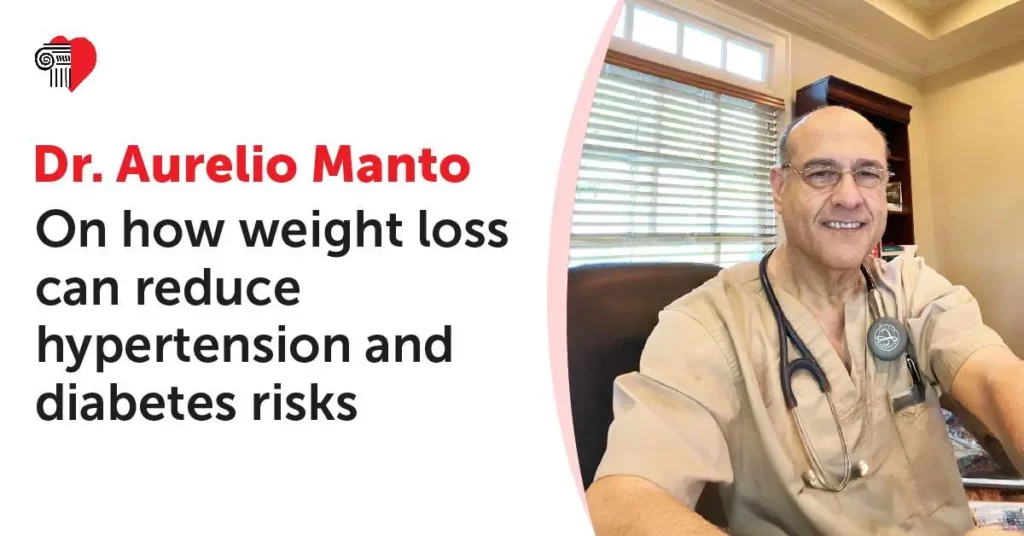
Dr. Manto, MD
Dr. Manto is a board-certified physician specializing in internal medicine and metabolic health at the Athens Heart Center. Her clinical focus centers on chronic disease prevention, weight management, and age-related metabolic shifts. Dr. Manto works closely with Medicare beneficiaries to design personalized medical, nutritional, and resistance-training regimens that ensure safe, muscle-preserving weight loss.
Navigating the new Medicare GLP-1 Bridge Program requires a dedicated healthcare partner to evaluate your eligibility, manage the central authorization process, and design a safe, effective medical weight management plan.
If you believe you meet the criteria for this groundbreaking program, don't wait until the July launch to prepare your documentation.



Share Your Thoughts
No comments yet — be the first to comment!