Board Certified in Cardiovascular Disease and Sleep Medicine
Athens Heart Center & Specialty Clinics, Athens, GA
Last updated on April 3, 2026
Hearing the words “you have cancer” is one of the most frightening moments in a person’s life. Understandably, the immediate focus shifts to fighting the disease, choosing the right oncologist, starting chemotherapy, and doing everything possible to survive.
But after more than three decades practicing cardiology, I have learned something important that many patients, and even some clinicians, don’t fully consider early enough: cancer treatment can have lasting consequences for the heart.
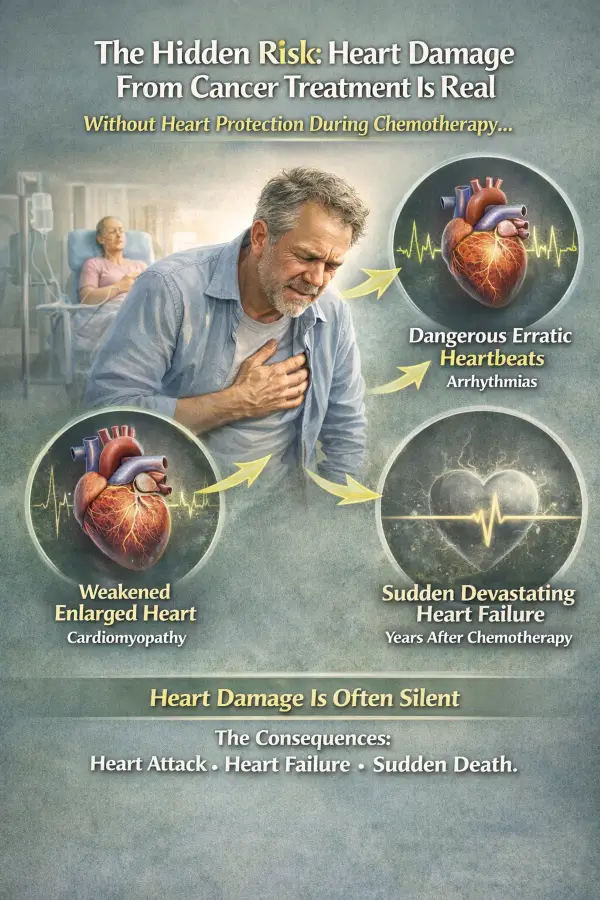
Modern oncology has dramatically improved survival rates. Treatments that once seemed impossible are now saving lives every day. Yet many of these therapies, while highly effective against cancer, can place considerable stress on the cardiovascular system. It is not uncommon for a patient to successfully complete cancer treatment only to develop heart failure, arrhythmias, or cardiomyopathy years later.
This is precisely why the field of cardio-oncology has emerged.
At Athens Heart Center & Specialty Clinics, our goal is simple: patients should not have to choose between beating cancer and protecting their heart. With the right monitoring and preventive care, both are possible.
The Hidden Risk: Cancer Therapy-Induced Cardiotoxicity
Many commonly used cancer therapies can affect the heart. Drugs such as anthracyclines (for example, doxorubicin) and targeted therapies like trastuzumab (Herceptin) have revolutionized cancer treatment. However, these medications may also cause what physicians call cancer therapy-induced cardiotoxicity.Cardiotoxicity can manifest in several ways:
Weakening of the heart muscle (cardiomyopathy)
Development of heart failure
Irregular heart rhythms (arrhythmias)
Long-term structural heart damage
What makes this particularly challenging is that cardiac injury often develops silently. A patient may feel completely fine while subtle damage is already occurring at the cellular level.According to the National Cancer Institute and the National Institutes of Health, certain chemotherapy agents and targeted therapies are known to increase long-term cardiovascular risk. As cancer survival improves, the number of patients living with treatment-related heart disease is also increasing.For that reason, cardiac care should begin before treatment starts, not after symptoms appear.
Step 1: Pre-Treatment Cardiac Risk Assessment
The first step in protecting the heart during cancer therapy is understanding the patient’s baseline cardiovascular risk.
Before chemotherapy begins, we conduct a thorough cardiac evaluation. This includes reviewing personal and family history, assessing blood pressure and cholesterol levels, and identifying existing conditions such as diabetes or prior heart disease.
This process is often referred to as cardiac clearance for cancer treatment, and it provides oncologists with valuable information when selecting treatment protocols.
By identifying cardiovascular risk factors early, we can help ensure that the patient begins chemotherapy with a clear understanding of their heart health, and a plan to protect it.
Step 2: The Role of Genetic and Pharmacogenomic Testing
One of the most exciting developments in modern medicine is the ability to personalize treatment based on a patient’s genetic profile.In cardio-oncology, pharmacogenomic testing can sometimes help predict how a patient’s body might respond to certain chemotherapy drugs. Research has identified genetic variants, such as those involving the SLC28A3 and RARG genes, that may influence susceptibility to anthracycline-related cardiotoxicity.By identifying these genetic risk factors early, physicians can collaborate with oncologists to consider options such as:
Adjusting chemotherapy dosage
Choosing alternative treatment agents
Initiating preventive heart medications when appropriate
This approach reflects a broader shift in medicine toward precision care, where treatment decisions are increasingly guided by individual biology rather than generalized assumptions.
Step 3: Continuous Monitoring During Treatment
Cardiac protection does not stop once chemotherapy begins. In fact, this is when ongoing monitoring becomes most important.
During treatment, we often use advanced imaging techniques such as echocardiography to evaluate heart function. One particularly useful measurement is global longitudinal strain, which can detect subtle changes in heart muscle performance long before symptoms develop.
We also monitor cardiac biomarkers in blood tests—such as troponin levels—that may indicate early cardiac stress.
In certain cases, patients may benefit from temporary heart rhythm monitoring devices that track electrical activity over extended periods. These tools allow physicians to detect arrhythmias or other abnormalities early and intervene quickly.
The goal is straightforward: identify problems at the earliest possible stage, when they are most manageable.
Why Cardio-Oncology Matters More Than Ever
As cancer treatments continue to advance, survivorship is increasing. That is an extraordinary success story for modern medicine.
However, longer survival also means we must address the long-term health consequences of treatment. Cardiovascular disease has become one of the leading health challenges faced by cancer survivors.
Organizations such as the American Heart Association emphasize that collaboration between cardiologists and oncologists is essential to improving outcomes for these patients.
Cardio-oncology is not about discouraging cancer treatment, it is about making treatment safer.
A Partnership Focused on the Patient
When someone is diagnosed with cancer, their attention should be focused on recovery and survival, not on worrying whether their heart will be damaged along the way.
Through proactive cardiovascular care, early detection strategies, and close collaboration with oncology teams, it is possible to significantly reduce the risk of treatment-related heart complications.
At Athens Heart Center & Specialty Clinics, we approach cardio-oncology as a partnership between patient, cardiologist, and oncologist. Our role is to ensure that the therapies designed to save a life do not unintentionally compromise long-term heart health.
Cancer survivorship should represent the beginning of a new chapter, and not the start of another serious medical condition.
If you are a patient preparing to begin chemotherapy, or a clinician seeking cardiovascular support for your patient, early evaluation can make a meaningful difference.
Because surviving cancer should never come at the cost of your heart.





Share Your Thoughts
No comments yet — be the first to comment!