How Routine Health Screenings Can Detect Problems Early and Help You Stay Healthier Longer
Many serious health conditions develop quietly.
High blood pressure often causes no symptoms. High cholesterol can damage blood vessels for years without warning. Type 2 diabetes may go unnoticed until complications appear. Even some forms of cancer can progress without obvious signs during the early stages.
The good news is that many of these conditions can be detected through preventive health screenings before they become more serious.
Preventive care is one of the most effective ways to protect your long term health. By identifying risk factors early, you and your healthcare provider can take steps to prevent disease, reduce complications, and improve your quality of life.
At Athens Heart Center, our primary care team emphasizes preventive medicine because staying healthy is always better than treating advanced disease.
What Are Preventive Screenings?
Preventive screenings are medical tests and evaluations performed before symptoms develop.
Rather than diagnosing illness after you become sick, these screenings help detect health problems early, when treatment is often simpler and more effective.
Depending on your age, medical history, family history, and lifestyle, your healthcare provider may recommend different screening tests throughout your life.
According to the Centers for Disease Control and Prevention, preventive care plays a vital role in reducing the risk of chronic disease and improving overall health.
https://www.cdc.gov/chronicdisease/about/preventive-care.htm
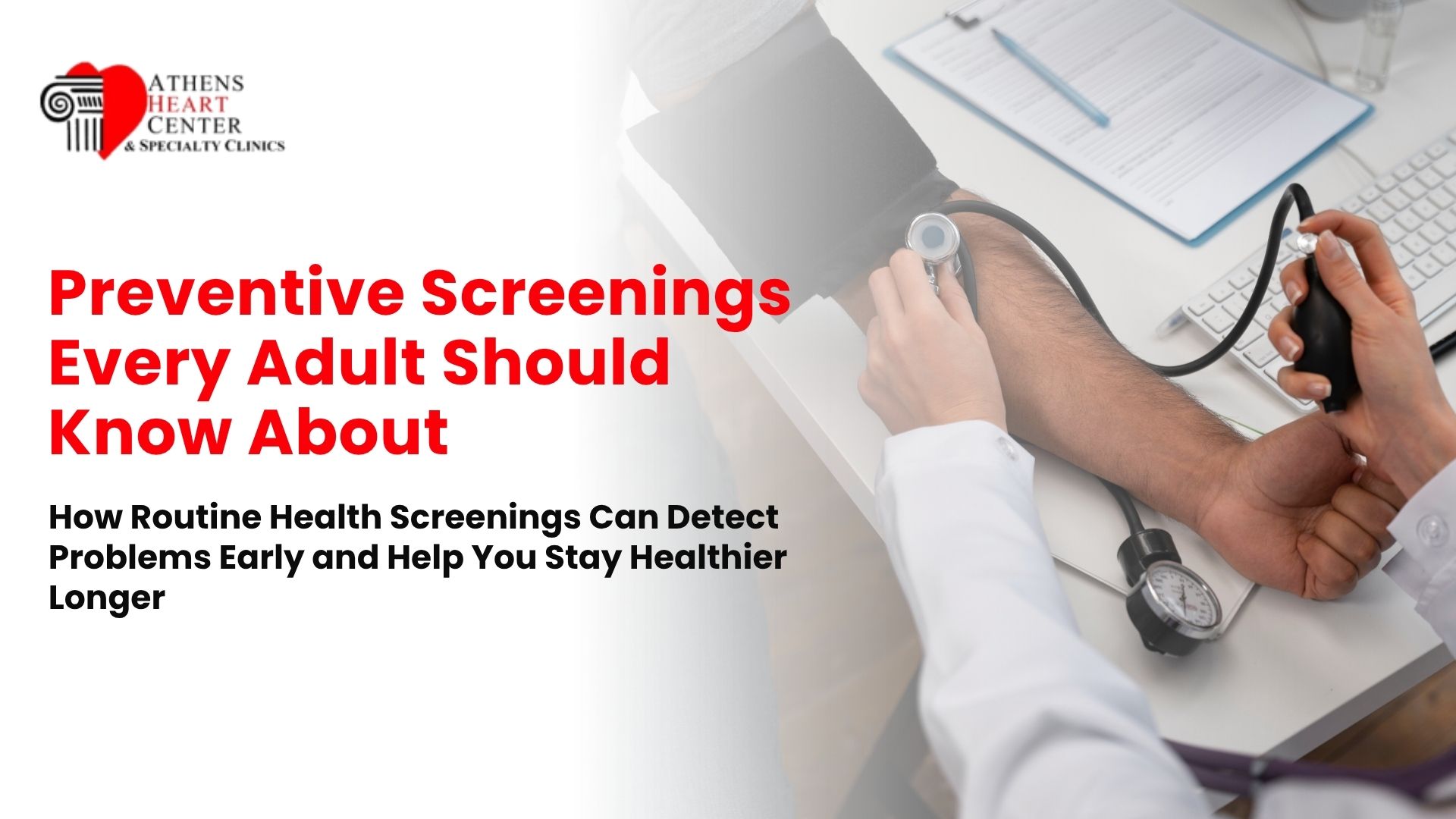
Blood Pressure Screening
High blood pressure is often called the "silent killer" because it usually causes no symptoms.
Left untreated, hypertension increases the risk of:
- Heart attack
- Stroke
- Heart failure
- Kidney disease
- Vision problems
Routine blood pressure checks allow early diagnosis and treatment before complications develop. Learn more about how high blood pressure impacts your heart and natural ways to lower it.
The American Heart Association recommends regular blood pressure monitoring for adults, especially those with cardiovascular risk factors.
https://www.heart.org/en/health-topics/high-blood-pressure
Cholesterol Screening
High cholesterol contributes to plaque buildup inside the arteries, increasing the risk of heart attack and stroke.
A simple blood test measures:
- Total cholesterol
- LDL cholesterol
- HDL cholesterol
- Triglycerides
Your provider will recommend how often testing should be repeated based on your age and individual risk factors.
Diabetes Screening
Many people with prediabetes or Type 2 diabetes have no noticeable symptoms.
Early diagnosis allows treatment to begin before serious complications affect the heart, kidneys, eyes, and nerves.
You may need diabetes screening if you have:
- Excess weight
- High blood pressure
- High cholesterol
- A family history of diabetes
- A sedentary lifestyle
Screening typically includes fasting blood sugar or an A1C blood test.
According to the American Diabetes Association, early detection can significantly reduce the risk of diabetes related complications.
https://diabetes.org
Heart Health Evaluation
Your provider may recommend additional cardiovascular screening based on your age and risk factors. Understanding what a cardiologist does and when to visit one can help guide your decision to seek specialized heart evaluation.
This evaluation may include:
- Blood pressure measurement
- Cholesterol testing
- Cardiovascular risk assessment
- Electrocardiogram (EKG) when appropriate
- Discussion of lifestyle habits
- Family history review
These assessments help identify people at increased risk for cardiovascular disease before symptoms develop.
Colorectal Cancer Screening
Colorectal cancer is one of the most preventable forms of cancer when detected early.
Screening can identify precancerous polyps before they become cancer.
Several screening options are available, including stool based testing and colonoscopy.
Your healthcare provider will recommend the most appropriate screening schedule based on your age, family history, and overall health.
Breast Cancer Screening
Routine mammograms help detect breast cancer at an early stage, often before a lump can be felt.
Women should discuss the appropriate age to begin screening and how often testing should be performed based on their personal risk factors.
Cervical Cancer Screening
Women should receive routine cervical cancer screening according to current clinical guidelines.
Screening may include:
- Pap tests
- Human papillomavirus (HPV) testing
These tests can detect abnormal cervical cells before cancer develops.
Prostate Cancer Screening
Not every man requires prostate cancer screening, but many benefit from discussing the potential risks and benefits with their healthcare provider.
Your age, family history, race, and overall health all influence screening recommendations.
Shared decision making is an important part of determining whether screening is appropriate.
Bone Density Testing
Bone loss often develops without symptoms until a fracture occurs.
Bone density testing helps identify osteoporosis and fracture risk, particularly in older adults and postmenopausal women.
Early diagnosis allows treatment that may help preserve bone health.
Vaccination Review
Preventive care includes more than screening tests.
Routine immunizations help protect against serious infectious diseases.
Your provider may recommend vaccines such as:
- Influenza
- COVID 19
- Pneumococcal
- Shingles
- Tetanus booster
Vaccination recommendations vary based on age, health conditions, and individual risk factors.
Lifestyle Risk Assessment
One of the most valuable aspects of preventive care is discussing lifestyle habits that influence long term health.
Your provider may evaluate:
Small lifestyle changes can have a significant impact on reducing the risk of chronic disease.
Why Annual Wellness Visits Matter
Even if you feel healthy, annual wellness visits provide an opportunity to:
- Review your medical history
- Update medications
- Discuss new symptoms
- Monitor chronic conditions
- Identify changing health risks
- Stay current with recommended screenings
Many preventable diseases can be detected before symptoms appear during these routine visits. Learn how primary care helps manage chronic conditions long-term.
A Simple Self Assessment
Ask yourself these questions:
- Have I had my blood pressure checked within the past year?
- Do I know my cholesterol numbers?
- Have I been screened for diabetes if I have risk factors?
- Am I current on recommended cancer screenings?
- Have I had an annual wellness visit in the past year?
- Do I know my family's health history?
If you answered no to several of these questions, it may be time to schedule a preventive health evaluation.
Frequently Asked Questions
1. What are preventive health screenings?
Preventive screenings are medical tests performed before symptoms develop to detect diseases early and reduce the risk of serious health complications.
2. How often should adults have a wellness visit?
Most adults benefit from seeing their primary care provider at least once a year, although the frequency may vary based on age and medical conditions.
3. Why is blood pressure screening important?
High blood pressure often causes no symptoms but significantly increases the risk of heart attack, stroke, kidney disease, and heart failure.
4. When should cholesterol screening begin?
The appropriate age depends on your individual risk factors. Your healthcare provider can recommend the right screening schedule based on your health history.
5. Do healthy adults still need preventive screenings?
Yes. Many chronic diseases develop silently, and preventive screenings help detect them before symptoms appear.
6. What cancers can be detected through routine screening?
Depending on your age and risk factors, screening may help detect colorectal, breast, cervical, prostate, and certain other cancers at an earlier stage.
7. Can preventive care lower healthcare costs?
Yes. Detecting and treating health conditions early often reduces the need for more complex and expensive treatments later.
The Bottom Line
Preventive screenings are one of the most valuable investments you can make in your long term health.
By identifying conditions such as high blood pressure, high cholesterol, diabetes, and certain cancers before symptoms appear, preventive care helps you take control of your health and reduce the risk of future complications.
Staying current with recommended screenings, annual wellness visits, and healthy lifestyle habits can help you live a longer, healthier, and more active life.
Schedule Your Preventive Health Visit at Athens Heart Center
At Athens Heart Center, we believe prevention is the foundation of lifelong wellness. Our primary care team provides comprehensive preventive care, annual wellness visits, health screenings, and personalized risk assessments to help detect potential health concerns before they become serious.
Whether you are due for a routine checkup or want to better understand your personal health risks, we are here to help you make informed decisions about your care.
Schedule your preventive health visit today and take an important step toward protecting your heart and your overall health for years to come.

Share Your Thoughts
No comments yet — be the first to comment!