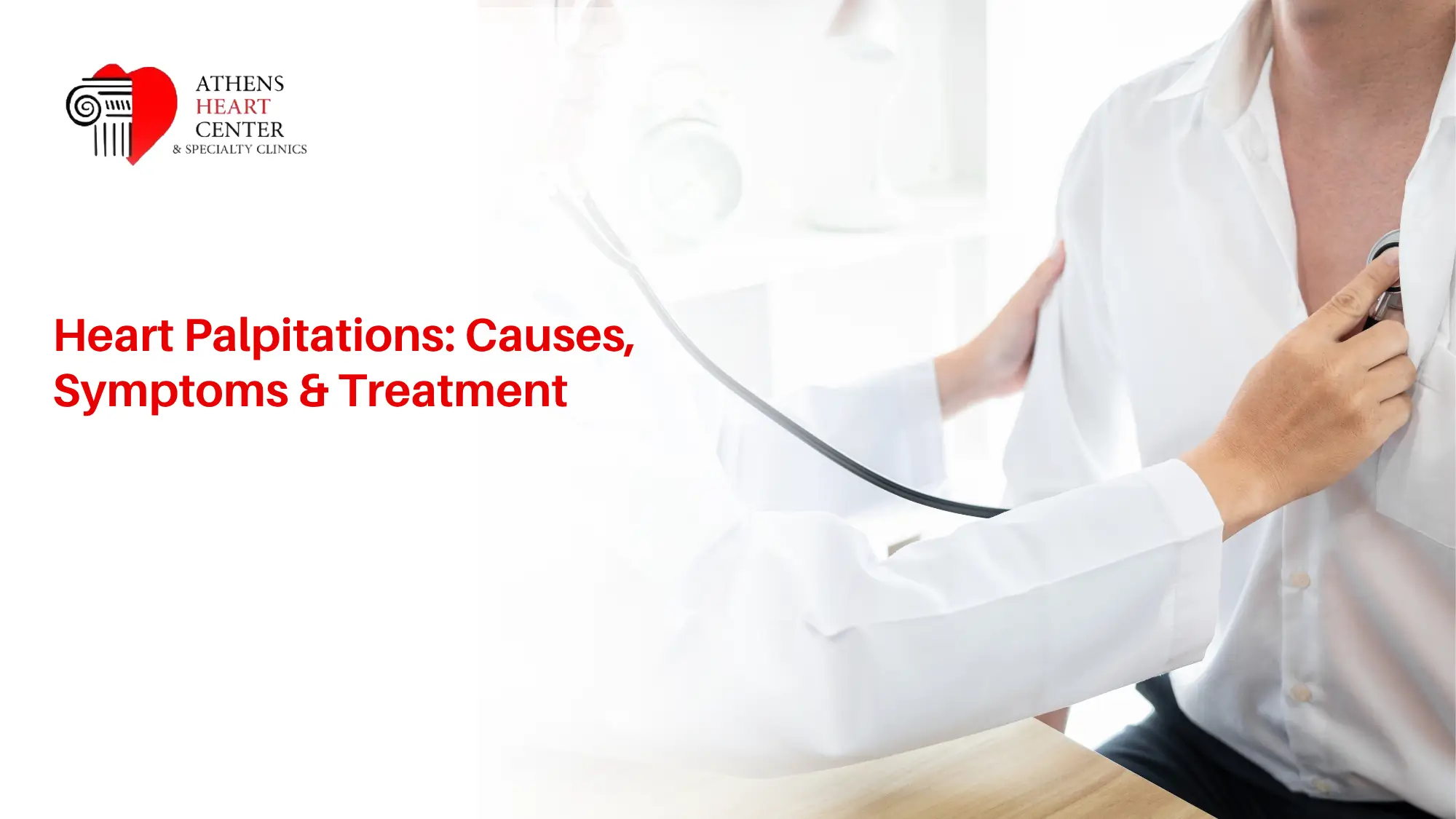
Heart Palpitations: Causes, Symptoms & Treatment — What That Racing, Fluttering, or Pounding Sensation in Your Chest Could Mean
Have you ever felt your heart suddenly racing, pounding, fluttering, or skipping a beat?
That sensation is known as a heart palpitation. Palpitations can be alarming, especially when they happen unexpectedly. But experiencing a palpitation does not necessarily mean that you have a serious heart problem.
Sometimes palpitations are related to stress, caffeine, lack of sleep, dehydration, or other temporary factors. In other cases, they may be associated with an abnormal heart rhythm or another underlying medical condition.
Understanding what may be causing your symptoms can help you recognize when monitoring is enough and when it is important to seek medical evaluation.
At Athens Heart Center, our specialized cardiology team evaluates heart palpitations by looking at the patient's symptoms, medical history, heart rhythm, and potential underlying causes.
What Are Heart Palpitations?
Heart palpitations are sensations that make you unusually aware of your heartbeat.
You may feel that your heart is:
- Racing
- Pounding
- Fluttering
- Beating unusually hard
- Skipping a beat
- Beating irregularly
You may notice the sensation in your chest, throat, or neck. Palpitations can last for only a few seconds or continue for several minutes or longer.
In many cases, they are harmless. However, recurring or unexplained palpitations deserve attention, particularly when they occur with other symptoms.
What Causes Heart Palpitations?
There are many possible causes of palpitations, and they are not always related to a heart condition.
Stress and Anxiety
Strong emotions can activate your body's stress response and cause your heart to beat faster. Stress, anxiety, fear, and panic can all produce noticeable heartbeats.
This does not mean the symptoms should simply be dismissed. If palpitations are frequent or interfering with your daily life, talk with your primary care provider.
Caffeine and Stimulants
Caffeine can increase heart rate and make some people more aware of their heartbeat. Coffee, energy drinks, tea, and certain supplements may contain stimulants that can trigger palpitations in susceptible individuals.
If you notice that palpitations consistently occur after consuming caffeine, discuss your symptoms with your healthcare provider.
Lack of Sleep
Poor sleep can affect your heart rate and increase your body's stress response. If you regularly sleep poorly and experience palpitations, improving your sleep habits may help. Persistent symptoms should still be evaluated.
Dehydration
When you are dehydrated, changes in blood volume and electrolyte balance can affect how your heart functions. Drinking enough fluids throughout the day is an important part of maintaining overall cardiovascular health.
Medications
Some prescription and over-the-counter medications can cause palpitations as a side effect. Examples may include certain:
- Decongestants
- Asthma medications
- Stimulant medications
- Thyroid medications
If you notice new palpitations after starting or changing a medication, speak with your healthcare provider before making changes to your treatment.
When Palpitations May Be Related to a Heart Condition
Sometimes palpitations are associated with an abnormal heart rhythm, also known as an arrhythmia. Arrhythmias occur when the heart beats too quickly, too slowly, or irregularly.
Some rhythm abnormalities are relatively harmless, while others require specialized arrhythmia management and treatment. Examples include:
- Atrial fibrillation
- Atrial flutter
- Supraventricular tachycardia
- Premature atrial contractions
- Premature ventricular contractions
- Ventricular arrhythmias
The presence of palpitations alone cannot determine which condition, if any, is responsible. Testing may be necessary to identify the underlying rhythm, or to rule out other cardiovascular issues such as structural heart defects or early signs of heart failure.
What Other Medical Conditions Can Cause Palpitations?
Palpitations can sometimes occur because of conditions outside the heart. Potential causes include:
- Anemia
- Overactive thyroid
- Fever
- Hormonal changes
- Low blood sugar
- Electrolyte abnormalities
This is one reason a thorough medical evaluation can be important when palpitations are persistent or unexplained.
What Symptoms Can Occur With Palpitations?
Some people experience palpitations without any other symptoms. Others may experience:
- Dizziness
- Lightheadedness
- Shortness of breath
- Chest discomfort
- Weakness
- Fatigue
- Feeling faint
The combination of symptoms matters when determining how urgently you should be evaluated.
When Are Heart Palpitations an Emergency?
Not every palpitation requires emergency care.
However, seek emergency medical attention if palpitations occur with symptoms such as:
- Chest pain or pressure
- Severe shortness of breath
- Fainting or loss of consciousness
- Severe dizziness
- Significant weakness
- Other symptoms suggesting a medical emergency
If you believe you may be experiencing a heart attack or another emergency, call 911 rather than driving yourself to the hospital.
How Are Heart Palpitations Diagnosed?
Your provider will begin by asking questions about your symptoms, such as:
- When did the palpitations begin?
- How long do they last and how often do they occur?
- Do they start and stop suddenly?
- What were you doing when they began (exercise vs. rest)?
- Do you experience dizziness, chest discomfort, or shortness of breath?
- Do you consume caffeine or other stimulants?
- What medications and supplements do you take?
Tests Your Doctor May Recommend
Depending on your symptoms, your provider may recommend one or more diagnostic testing procedures:
- Electrocardiogram (EKG): Records the electrical activity of your heart and may identify an abnormal rhythm during the test.
- Holter Monitor: Continuously records your heart rhythm over a longer period, often 24 hours or more, capturing intermittent events.
- Event or Patch Monitor: Recommended if palpitations occur less frequently to record your heart rhythm over an extended period.
- Echocardiogram: Uses ultrasound to evaluate the structural integrity and function of your heart.
- Blood Tests: Used to check for underlying contributors such as thyroid abnormalities, anemia, electrolyte changes, or other metabolic problems.
How Are Heart Palpitations Treated?
Treatment depends on what is causing the palpitations.
If they are related to lifestyle factors, your provider may recommend changes such as reducing caffeine, avoiding stimulant products, staying adequately hydrated, improving sleep, managing stress, or reviewing medications.
If an arrhythmia or another medical condition is responsible, treatment will focus on the underlying problem. Depending on the diagnosis, treatment may include medication, monitoring, procedures, or other specialized care.
Should You Keep a Record of Your Palpitations?
Yes. If your palpitations happen intermittently, keeping track of them can provide useful information for your healthcare provider. Record the date, time, duration, triggers (caffeine, exercise, stress), and any co-occurring symptoms.
If you are using a wearable device that records heart rate or rhythm, share relevant information with your healthcare provider rather than relying on the device alone for diagnosis.
A Simple Self Assessment
Ask yourself:
- Are my palpitations happening repeatedly?
- Do they occur without an obvious trigger or during physical activity?
- Do they last longer than a few seconds?
- Do I experience dizziness or shortness of breath with them?
- Have I ever fainted during or after an episode?
- Do I have a personal or family history of heart rhythm problems?
If your palpitations are recurring or accompanied by other symptoms, schedule an evaluation with a healthcare professional.
Frequently Asked Questions
1. Are heart palpitations dangerous?
Not always. Many palpitations are caused by temporary factors such as stress, caffeine, or lack of sleep. However, some are associated with abnormal heart rhythms and should be evaluated.
2. Can anxiety cause heart palpitations?
Yes. Stress and anxiety can activate the body's fight-or-flight response and make your heart beat faster or more forcefully.
3. When should I see a cardiologist for palpitations?
Consider cardiovascular evaluation if palpitations are recurring, unexplained, occur with exercise, or are accompanied by symptoms such as dizziness, fainting, chest discomfort, or shortness of breath.
4. Can caffeine cause palpitations?
Caffeine can trigger palpitations in some people. If you notice a consistent relationship between caffeine consumption and your symptoms, discuss it with your healthcare provider.
5. What test can detect an irregular heartbeat?
An EKG can identify an abnormal rhythm when it occurs during the test. For intermittent symptoms, a Holter monitor or longer-term cardiac monitor may be more useful.
6. Can heart palpitations go away on their own?
Yes. Some palpitations are temporary and resolve when the underlying trigger goes away. Recurring or unexplained symptoms should still be discussed with a healthcare professional.
7. Should I worry about a skipped heartbeat?
Occasional skipped or extra beats can occur in healthy people. However, frequent symptoms or skipped beats accompanied by chest pain, fainting, severe dizziness, or shortness of breath require medical attention.
The Bottom Line
Heart palpitations can feel frightening, but they do not automatically mean something is seriously wrong with your heart.
Stress, caffeine, dehydration, medications, and lack of sleep can all contribute to noticeable heartbeats. At the same time, recurring palpitations can sometimes signal an abnormal heart rhythm or another medical condition.
The key is understanding when your symptoms need evaluation. If your palpitations are persistent, unexplained, or accompanied by other concerning symptoms, don't simply ignore them. A medical evaluation can help determine what is causing them and whether treatment is necessary.
Get Your Heart Palpitations Evaluated at Athens Heart Center
If you are experiencing recurring racing, fluttering, pounding, or irregular heartbeats, the team at Athens Heart Center can help determine what may be causing your symptoms.
Our cardiovascular care team provides comprehensive evaluations and diagnostic testing, including EKGs and cardiac monitoring when appropriate, to identify potential heart rhythm problems and develop a personalized treatment plan.
Don't let unexplained heart palpitations leave you guessing.
Schedule an appointment with Athens Heart Center and take the next step toward understanding your heart health.



Share Your Thoughts
No comments yet — be the first to comment!