Understanding the Tests Your Cardiologist May Use to Find the Cause of Heart Symptoms
When something does not feel right with your heart, one of the most important steps is finding out why.
Symptoms such as chest discomfort, shortness of breath, dizziness, fatigue, or heart palpitations can have many possible causes. Some may be relatively minor, while others can be signs of an underlying cardiovascular condition.
That is why cardiologists use a variety of diagnostic tests. No single test can identify every heart problem. Instead, your cardiologist chooses testing based on your symptoms, medical history, risk factors, and what they need to learn about how your heart is functioning.
Three commonly used diagnostic tools are the electrocardiogram (EKG), cardiac stress testing, and cardiac PET imaging.
At Athens Heart Center, these diagnostic tests can provide important information about your heart's electrical activity, response to stress, blood flow, and overall cardiovascular function.
Why Do Cardiologists Order Diagnostic Tests?
A physical examination and medical history provide important information, but they cannot always explain what is happening inside the heart.
Diagnostic testing can help your cardiologist evaluate:
- Heart rhythm
- Electrical activity
- Blood flow to the heart muscle
- Heart function
- Possible coronary artery disease
- Structural abnormalities
- Changes that occur during exercise or stress
The specific tests you need depend on your symptoms and individual risk factors.
1. EKG: Looking at Your Heart's Electrical Activity
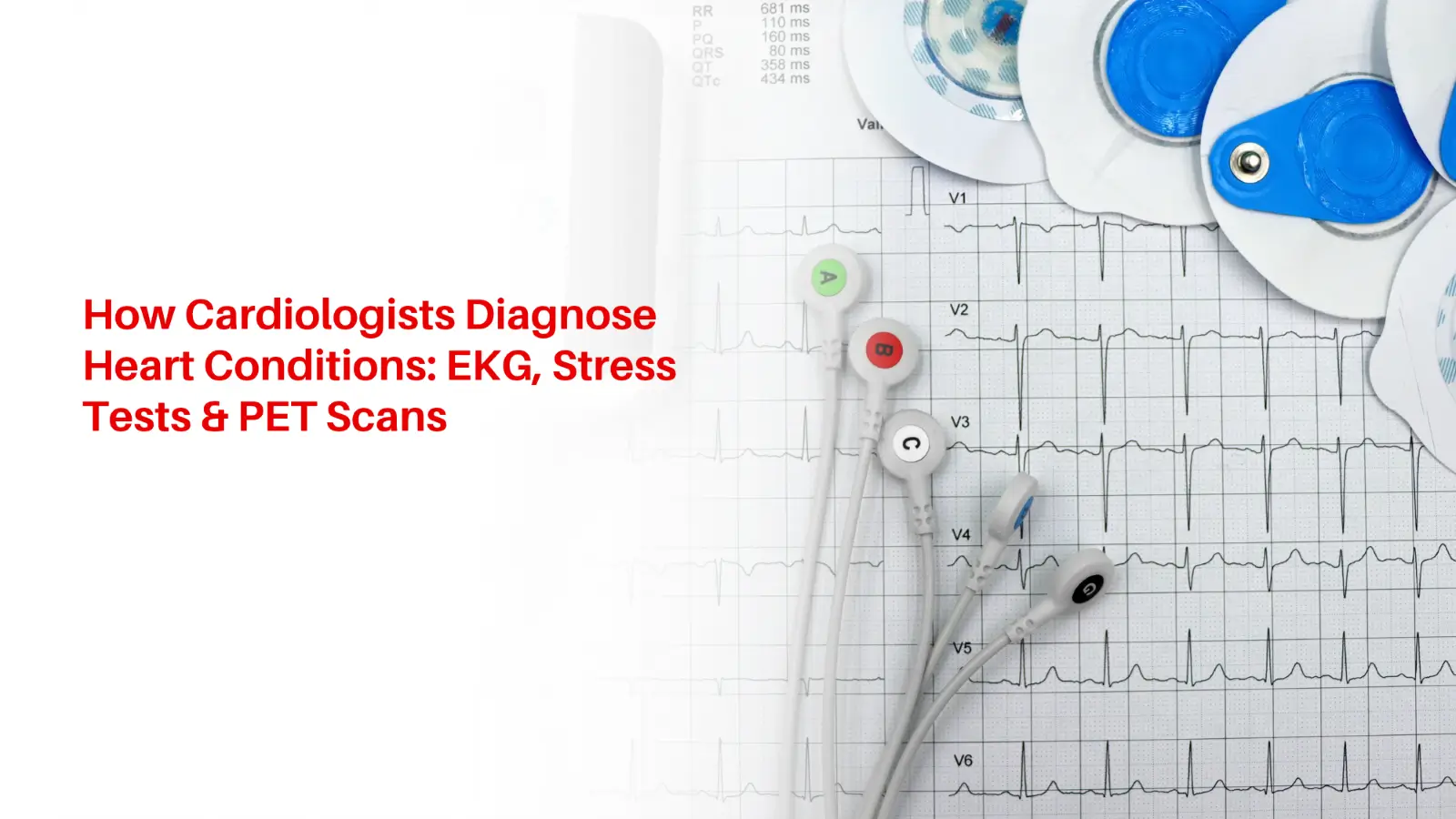
An electrocardiogram, commonly called an EKG or ECG, is one of the most basic and widely used cardiac tests.
It records the electrical signals generated by your heart as it beats. The test is quick, noninvasive, and typically performed in a doctor's office or medical facility. Small sensors called electrodes are placed on your skin to record the heart's electrical activity.
What Can an EKG Show?
An EKG can provide information about:
- Heart rate
- Heart rhythm
- Certain abnormal heart rhythms
- Electrical conduction problems
- Evidence of a previous heart attack
- Certain changes that may suggest reduced blood flow to the heart
An EKG is particularly useful when a patient reports symptoms such as palpitations, chest discomfort, dizziness, or fainting.
However, an EKG only captures your heart's electrical activity during the test. If an abnormal rhythm occurs only occasionally, your cardiologist may recommend longer term heart rhythm monitoring.
2. Stress Tests: Seeing How Your Heart Responds to Activity
Your heart behaves differently when you are resting compared with when your body needs more oxygen during physical activity. A cardiac stress test evaluates how your heart responds when it is working harder.
During an exercise stress test, you may walk on a treadmill while your heart rate, rhythm, blood pressure, and other measurements are monitored. The test can help your cardiologist determine whether exercise causes changes that may suggest a cardiovascular problem.
Why Would You Need a Stress Test?
Your cardiologist may consider stress testing when you have symptoms such as:
- Chest discomfort
- Shortness of breath during activity
- Unexplained fatigue
- Reduced exercise tolerance
Stress testing may also be used when your doctor wants to evaluate your cardiovascular risk or determine how your heart responds to increased workload.
What If You Cannot Exercise on a Treadmill?
Not everyone can safely exercise enough to complete a traditional treadmill stress test due to joint problems, mobility limitations, or other medical conditions. In these situations, a pharmacologic stress test may be an option. Instead of exercise, medication is used to create a controlled stress response while your heart is monitored.
3. PET Scans: Looking at Blood Flow to the Heart
A cardiac PET scan, or positron emission tomography scan, is an advanced imaging test that can provide detailed information about blood flow to the heart muscle.
PET imaging can be particularly useful when your cardiologist needs to evaluate whether different areas of the heart are receiving adequate blood flow. The test typically involves a small amount of radioactive tracer that allows specialized imaging equipment to visualize physiological activity.
What Can a Cardiac PET Scan Show?
Depending on the specific study, cardiac PET imaging can help evaluate:
- Blood flow to the heart muscle
- Areas with reduced blood supply
- The effect of stress on coronary blood flow
- The condition of heart muscle tissue
One important advantage of PET imaging is that it can provide information about blood flow under both resting and stressed conditions, helping your cardiologist determine whether a narrowing in a coronary artery is affecting blood supply.
EKG vs. Stress Test vs. PET Scan
These tests answer different clinical questions:
| Test |
What It Evaluates |
Common Uses |
| EKG |
Electrical activity and heart rhythm |
Palpitations, chest symptoms, rhythm evaluation |
| Stress Test |
Heart response to increased workload |
Evaluating symptoms with activity and possible coronary disease |
| PET Scan |
Blood flow and heart tissue function |
Detailed assessment of myocardial blood flow and coronary disease |
Your cardiologist may recommend one test or a combination depending on your symptoms and medical history.
Why One Test May Not Be Enough
The heart is a complex organ. One test may show an electrical problem while another provides information about blood flow or heart function.
For example, an EKG may be normal when you are resting even though you experience symptoms during exercise. A stress test can help evaluate what happens when your heart is under increased demand. Similarly, additional imaging may be recommended when your cardiologist needs more detailed information about blood flow or the heart muscle.
What Happens Before Your Cardiac Testing?
Before recommending a test, your cardiologist will typically review your symptoms, medical history, family history, blood pressure, cholesterol levels, diabetes status, smoking history, current medications, and previous cardiac tests.
What Should You Tell Your Cardiologist?
Be as specific as possible when describing your symptoms. Instead of simply saying, "My chest feels strange," explain when it happens, how long it lasts, what you were doing when it started, and whether exercise, rest, or position affects it.
When Should You Seek Emergency Care?
Diagnostic testing is important, but you should not wait for a scheduled appointment if you are experiencing symptoms that could indicate a medical emergency.
Call 911 immediately if you experience:
- Severe or persistent chest pain or pressure
- Significant difficulty breathing
- Fainting or loss of consciousness
- Sudden severe weakness
- Chest discomfort accompanied by sweating, nausea, or severe shortness of breath
The American Heart Association advises calling 911 when heart attack warning signs occur because emergency treatment can begin before reaching the hospital.
American Heart Association: Warning Signs of a Heart Attack
A Simple Self Assessment
Ask yourself:
- Have I developed new chest discomfort or shortness of breath during physical activity?
- Do I experience unexplained heart palpitations, dizziness, or fainting?
- Have I noticed a significant change in my exercise tolerance?
- Do I have cardiovascular risk factors such as high blood pressure, diabetes, or high cholesterol?
If you answered yes to any of these questions, discuss your symptoms with your healthcare provider.
Frequently Asked Questions
1. Is an EKG painful?
No. An EKG is a noninvasive test. Small electrodes are placed on the skin to record your heart's electrical activity.
2. How long does an EKG take?
A standard EKG is usually completed within a few minutes, although preparation may take additional time.
3. Does a stress test always involve exercise?
No. If you cannot exercise adequately, medication may be used to create a controlled stress response while your heart is monitored.
4. What is a cardiac PET scan used for?
Cardiac PET imaging can provide detailed information about blood flow to the heart muscle and may help evaluate certain forms of coronary artery disease.
5. Which heart test is best?
There is no single best cardiac test for everyone. The appropriate test depends on your symptoms, medical history, risk factors, and what your cardiologist needs to determine.
6. Can an EKG detect all heart problems?
No. An EKG primarily evaluates electrical activity and rhythm. Other tests may be necessary to assess blood flow, heart structure, or how the heart responds to stress.
7. Will I need more than one cardiac test?
Possibly. Different tests provide different types of information. Your cardiologist may combine test results to develop a more complete understanding of your cardiovascular health.
The Bottom Line
Modern cardiology offers several ways to understand what is happening inside your heart. An EKG can evaluate electrical activity and rhythm. A stress test can show how your heart responds when its workload increases. A cardiac PET scan can provide detailed information about blood flow to the heart muscle.
These tests are not competing alternatives. They are different tools that can help answer different medical questions.
Get Comprehensive Cardiac Evaluation at Athens Heart Center
At Athens Heart Center, our specialized cardiology team provides comprehensive evaluation and diagnostic testing to help identify the cause of heart-related symptoms and assess your cardiovascular health.
Whether you are experiencing chest discomfort, shortness of breath, palpitations, dizziness, or changes in your ability to exercise, getting the right evaluation can provide important answers.
Schedule an appointment with Athens Heart Center today and take a proactive step toward understanding and protecting your heart health.






Share Your Thoughts
No comments yet — be the first to comment!