A Simple Guide to One of the Most Common Heart Tests
If your doctor has recommended an electrocardiogram, commonly called an EKG or ECG, you may have questions about what the test involves and why it is necessary.
Common questions you might be asking:
- Will it hurt?
- How long does it take?
- Can it detect a heart attack?
- Does it tell if your heart is healthy?
These are common concerns, especially if it is your first heart test. The good news is that an EKG is one of the quickest, safest, and most valuable tools cardiologists use to evaluate heart health. It provides important information about your heart's electrical activity and can help detect a wide range of cardiovascular conditions before they become more serious.
At Athens Heart Center and Specialty Clinics, EKG testing is often one of the first steps in understanding symptoms such as chest pain, heart palpitations, dizziness, or shortness of breath.
What Is an Electrocardiogram?
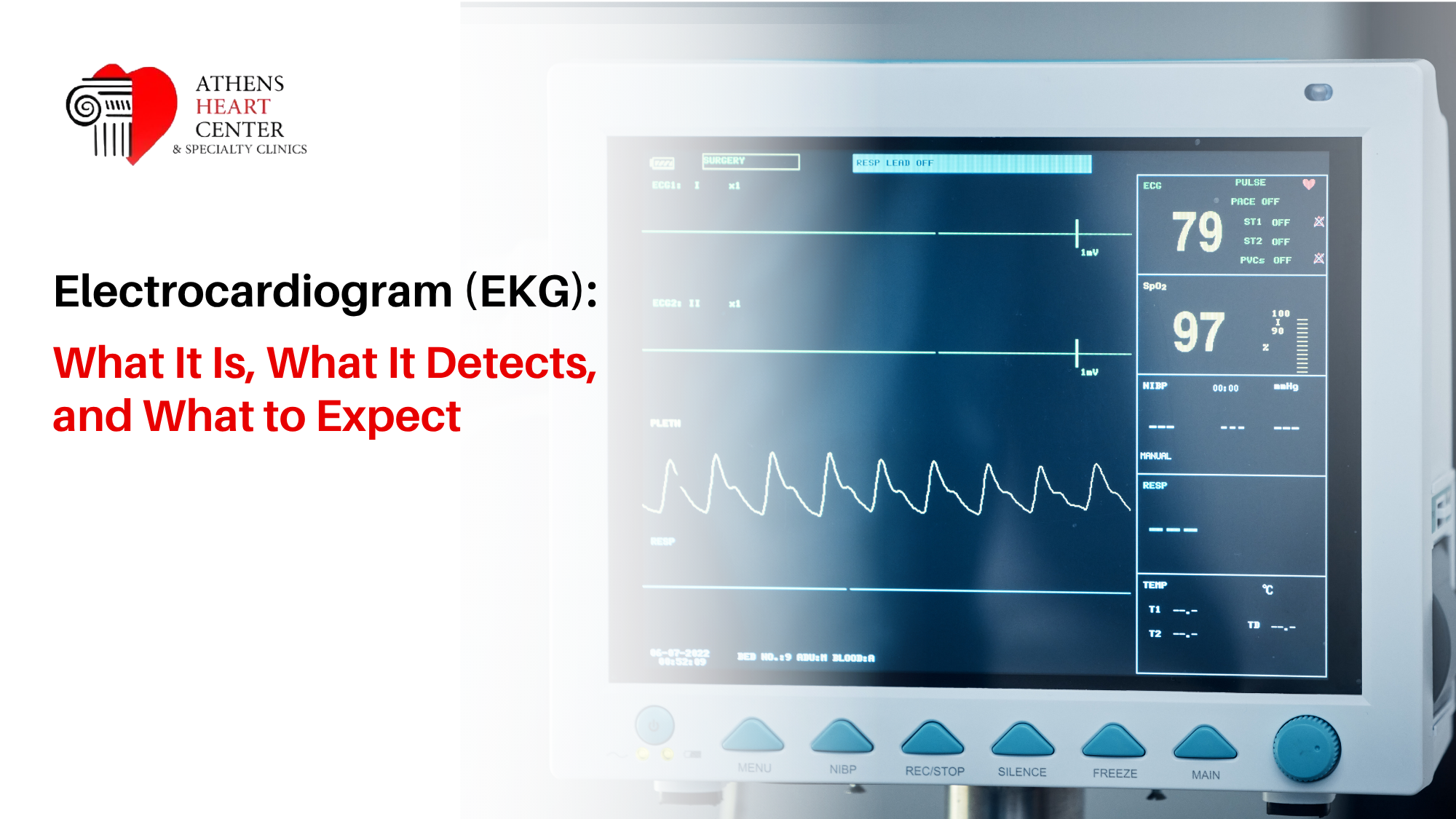
An electrocardiogram is a noninvasive test that records the electrical signals that control your heartbeat.
Every time your heart beats, an electrical impulse travels through the heart muscle, causing it to contract and pump blood throughout your body.
An EKG captures these electrical signals using small adhesive electrodes placed on your chest, arms, and legs. The information is displayed as wave patterns that your cardiologist interprets to evaluate your heart's rhythm and electrical function.
According to the American Heart Association, an EKG is one of the most commonly performed cardiac tests and plays an important role in diagnosing many heart conditions.
American Heart Association: Diagnosing a Heart Attack
What Can an EKG Detect?
Although the test only takes a few minutes, it can provide valuable information about your heart. An EKG may help detect:
- Irregular heart rhythms, also known as arrhythmias
- Evidence of a current or previous heart attack
- Poor blood flow to the heart muscle
- Abnormal heart conduction
- Enlargement of certain heart chambers
- The effects of electrolyte imbalances
- Changes related to certain medications
In some cases, an abnormal EKG may prompt additional testing, such as an echocardiogram, stress test, or heart monitor, to better understand the underlying cause.
Why Would My Doctor Order an EKG?
Your healthcare provider may recommend an EKG for many different reasons. Common situations include:
Even when symptoms seem mild, an EKG can provide valuable clues about how your heart is functioning.
What Happens During an EKG?
One of the biggest advantages of an EKG is how simple the procedure is.
You will usually lie comfortably on an examination table while a healthcare professional places several small adhesive electrodes on your chest, arms, and legs. The electrodes are connected to the EKG machine through wires.
During the recording, you simply remain still and breathe normally. The machine records your heart's electrical activity for just a few seconds.
The entire appointment usually takes less than ten minutes, with the actual recording lasting only a brief moment. The test is painless and does not involve needles, injections, or radiation.
How Should You Prepare for an EKG?
Most people do not need any special preparation. However, a few simple steps can help ensure accurate results:
- Wear comfortable clothing that allows easy access to your chest.
- Avoid applying lotions or oils to your chest on the day of the test, as they can make it more difficult for the electrodes to stick properly.
- Continue taking your medications unless your healthcare provider gives different instructions.
If you have questions before your appointment, your care team will provide guidance based on your individual situation.
What an EKG Cannot Tell You
While an EKG is extremely useful, it does have limitations. It records the electrical activity of your heart at the moment the test is performed. If an irregular heartbeat occurs only occasionally, it may not appear during the test.
An EKG also cannot show detailed images of your heart's structure or evaluate how well the heart muscle pumps blood. That is why your cardiologist may recommend additional testing depending on your symptoms and medical history. Each heart test provides a different piece of the overall picture.
Is an EKG Safe?
Yes. An EKG is one of the safest medical tests available.
The electrodes only detect electrical signals produced naturally by your heart. They do not send electricity into your body. There is no radiation exposure, and most patients return to normal activities immediately after the test.
When Should You See a Cardiologist?
If you have experienced symptoms such as chest discomfort, unexplained shortness of breath, dizziness, fainting, or irregular heartbeats, it is important not to ignore them.
While these symptoms are not always caused by heart disease, they deserve evaluation to rule out potentially serious conditions. An EKG is often the first step in determining whether additional cardiac testing is needed. Early diagnosis allows many heart conditions to be treated before they lead to more serious complications.
A Simple Self Assessment
Ask yourself these questions:
- Have I experienced chest pain or pressure?
- Do I notice skipped or irregular heartbeats?
- Have I felt dizzy or faint without explanation?
- Do I become short of breath during normal activities?
- Has my doctor told me I have high blood pressure or another heart condition?
- Do I have a family history of heart disease?
If you answered yes to one or more of these questions, your healthcare provider may recommend an EKG as part of your heart evaluation.
Frequently Asked Questions
1. What is the difference between an EKG and an ECG?
There is no difference. EKG and ECG refer to the same test. "EKG" comes from the German spelling, Elektrokardiogramm.
2. Does an EKG hurt?
No. An EKG is completely painless and noninvasive.
3. How long does an EKG take?
The actual recording usually takes only a few seconds, while the entire appointment is typically completed within ten minutes.
4. Can an EKG detect a heart attack?
Yes. An EKG can identify signs of a current heart attack and may also show evidence of a previous heart attack.
5. Can an EKG detect every heart problem?
No. Some heart conditions require additional testing, such as an echocardiogram, stress test, or continuous heart monitoring.
6. Do I need to fast before an EKG?
No. Most routine EKGs do not require fasting or special preparation.
7. When should I have an EKG?
Your healthcare provider may recommend an EKG if you have heart related symptoms, cardiovascular risk factors, or as part of a routine medical evaluation.
The Bottom Line
An electrocardiogram is one of the fastest and most effective ways to evaluate your heart's electrical activity.
Although the test itself is simple, it can provide valuable information that helps diagnose irregular heart rhythms, identify signs of heart disease, and guide further evaluation when needed. If your doctor recommends an EKG, think of it as an important step toward understanding and protecting your heart health.
Schedule Your Heart Evaluation at Athens Heart Center and Specialty Clinics
If you have been experiencing chest pain, heart palpitations, dizziness, shortness of breath, or other symptoms that concern you, do not wait to seek answers.
At Athens Heart Center and Specialty Clinics, our experienced cardiovascular team provides comprehensive heart evaluations, advanced diagnostic testing, including electrocardiograms and other cardiac imaging, and personalized treatment plans tailored to your individual needs.
Because early detection is one of the most effective ways to protect your heart and support a healthier future. Schedule your appointment today to take control of your cardiovascular wellness.






Share Your Thoughts
No comments yet — be the first to comment!